Macabre Money
Over our 1,100-year history, coins struck by The Royal Mint have accumulated their fair share of tales, some darker than others. From ghosts and poisonings to witchcraft and the supernatural, discover some of the more macabre stories alongside coins from the time.
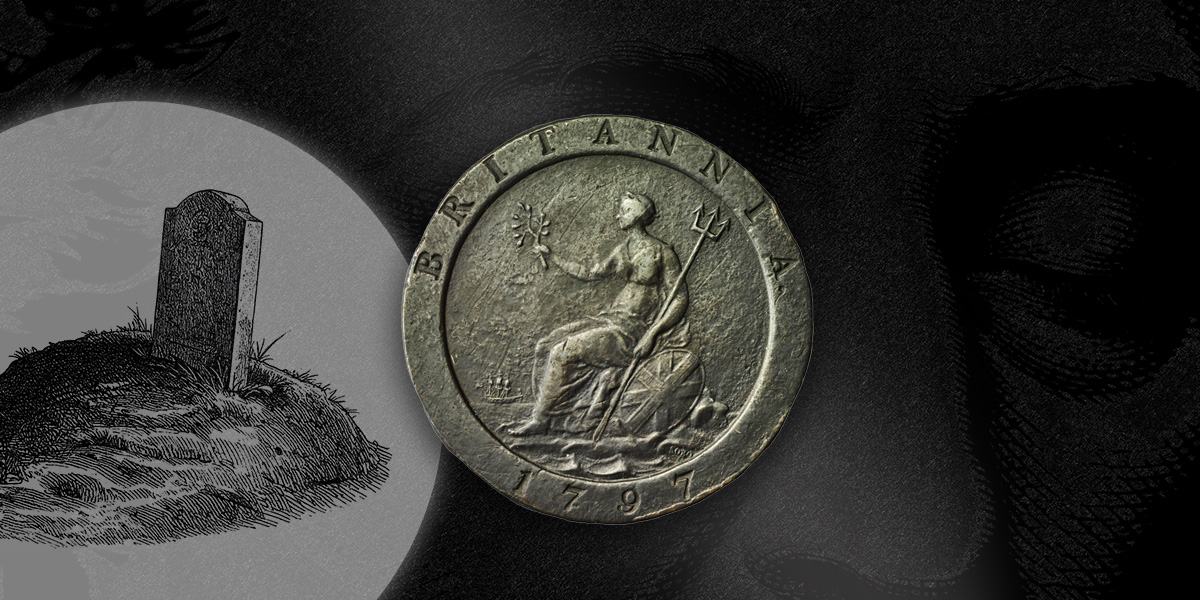
Eyes of the Dead
Centuries ago, coins found their way into customs surrounding death and mourning. Silver coins were sometimes placed over the eyes of the deceased, helping to keep their eyelids closed while the body was laid out for viewing. While there was a practical reason for the custom, the result was a macabre image. Pictured above is a 1797 Cartwheel Penny, one of the coins from the era.
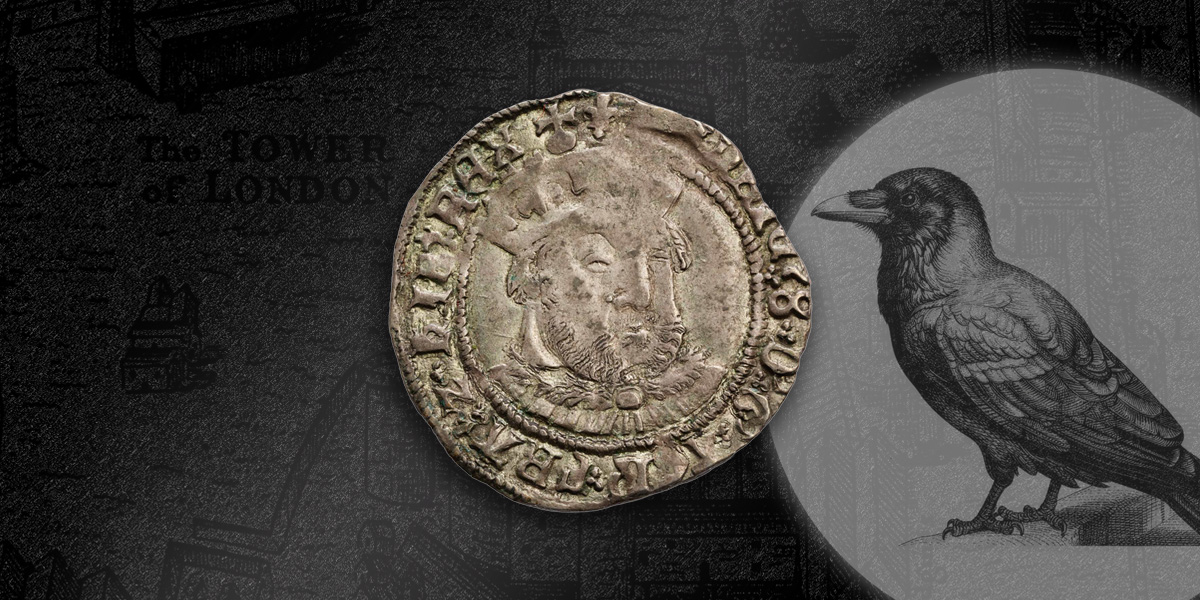
Terror at the Tower
The Tower of London is no stranger to ghost stories, perhaps the most famous being that of Anne Boleyn. Following her execution on Tower Green in 1536, legend has it that her ghost has been seen wandering the grounds. Pictured above is a groat from the reign of Henry VIII, whose second wife was Anne Boleyn.
At the time, the Tower was also home to The Royal Mint, and even Mint Street has its own ghostly tale. In 1789, soldiers were reportedly startled by a mysterious figure near Mint Street, only to discover that the ‘ghost’ was a mannequin covered with a sheet.
The Tower’s legends extend beyond ghosts. Its famous ravens are said to protect the fortress and the kingdom, with legend warning that both will fall should the birds ever leave. In 2019, one of the coins in our Tower of London collection featured the Legend of the Ravens.
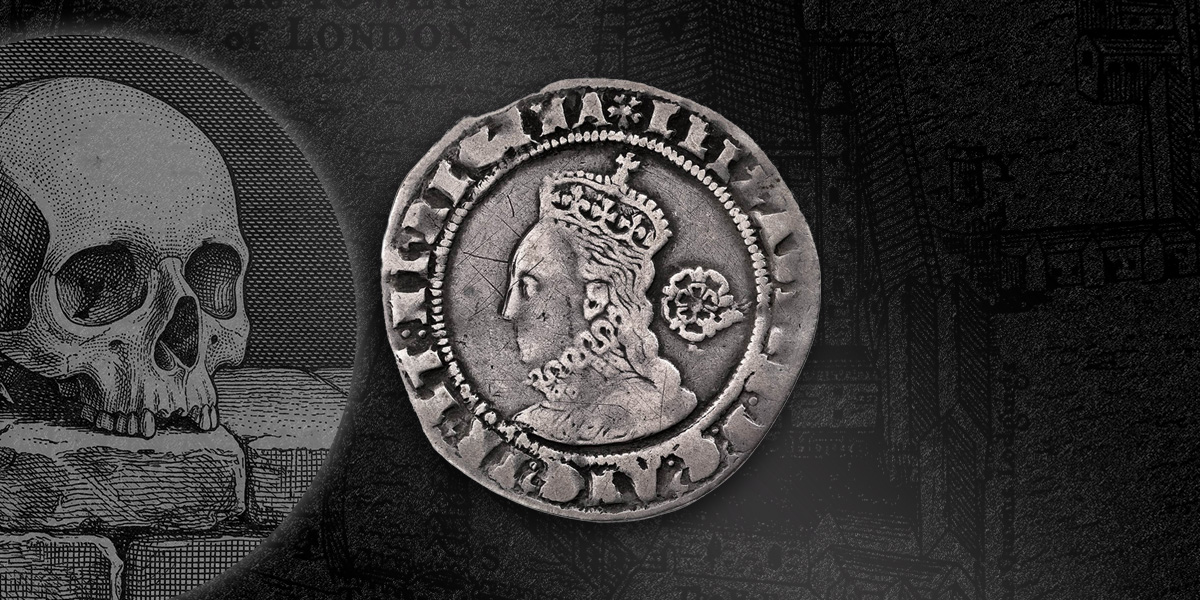
A Deadly Remedy
In 1560, a group of German workers at the Tower Mint fell seriously ill. Working with intense heat, metals and fumes was an unavoidable part of sixteenth-century coin production, and it was thought that fumes from the metalworking process may have been responsible.
The remedy prescribed to the unfortunate workers was far more unusual. They were reportedly advised to drink milk from a human skull. Some accounts claim that skulls were taken from the severed heads of executed traitors displayed on London Bridge, before being cleaned and used as drinking vessels.
Despite this unusual treatment, several of the workers are reported to have died, leaving behind one of the more macabre tales from the Tower Mint. Pictured above is a sixpence from the reign of Elizabeth I, who was the monarch at the time.
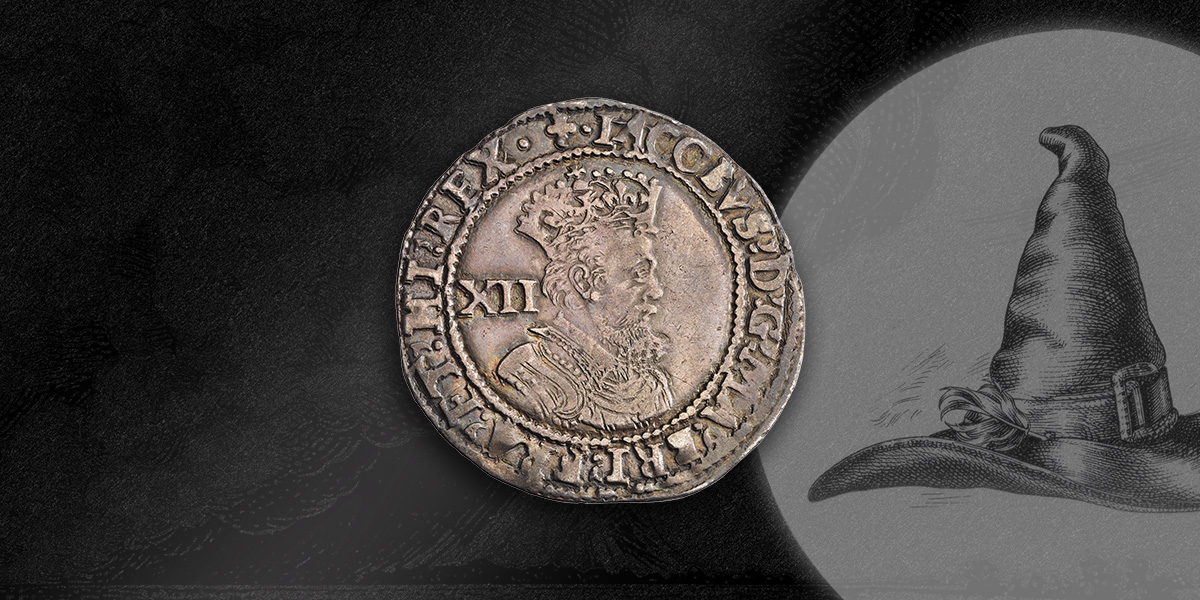
Burn the Witch
In 1590, King James VI took a personal interest in the North Berwick trials after becoming convinced that witches had attempted to harm him and his wife, Anne of Denmark, by raising violent storms at sea.
While the trials were unfolding, coinage bearing James VI’s name and royal titles was being struck in Scotland. This included silver pieces bearing a sword and balance scales, accompanied by the motto HIS DIFFERT REGE TYRANNVS, meaning ‘In these a tyrant differs from a king’. James would later explore his fascination with witchcraft in his 1597 book, Daemonologie. Pictured above is a Shilling from the era.
Off With Their Heads
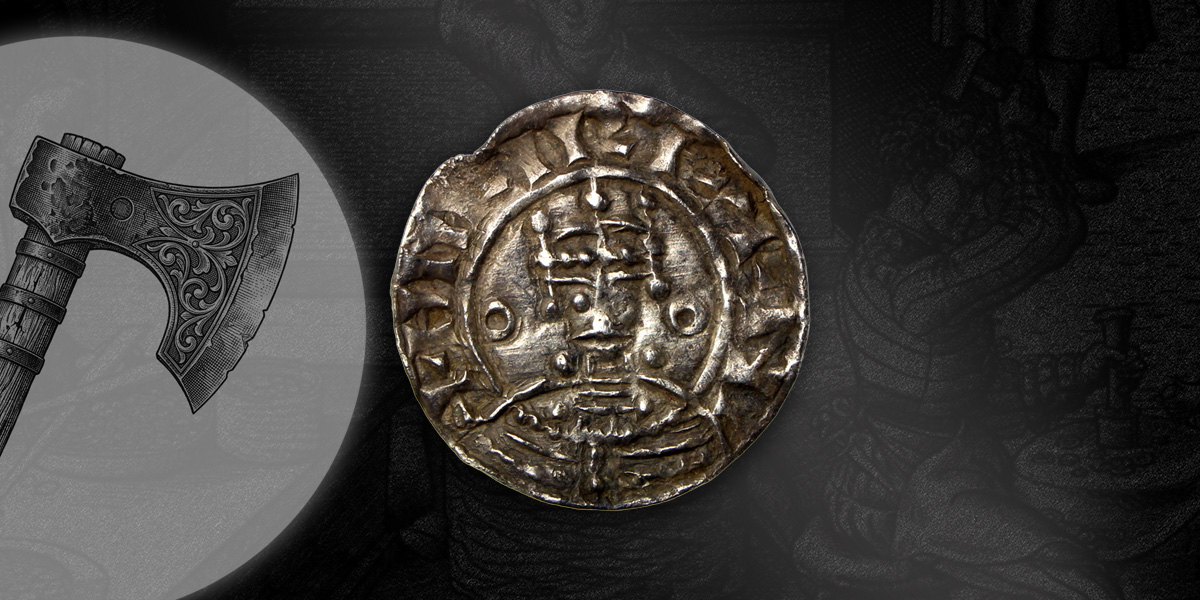
With confidence in the country’s silver coinage in decline in 1124, Henry I ordered action to be taken against coin makers accused of producing substandard coins. After being summoned to Winchester, those found guilty faced a brutal punishment in the form of the loss of their right hands. Pictured above is a Henry I Penny.
Making a Monster
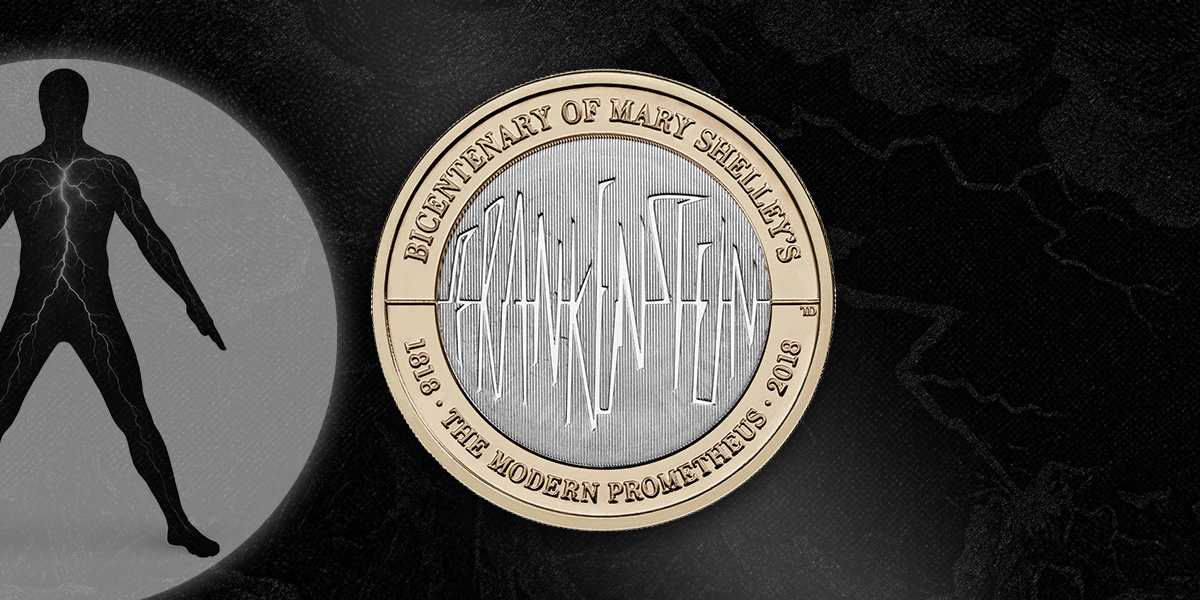
First published in 1818, Mary Shelley’s Frankenstein tells the chilling tale of a scientist whose quest to create life has terrifying consequences. Born in 1797 during the reign of George III, Shelley’s iconic creation has captivated readers for over 200 years. In 2018, The Royal Mint struck a commemorative coin marking the bicentenary of the legacy of Frankenstein and the birth of science fiction.
Paying the Devil’s Toll
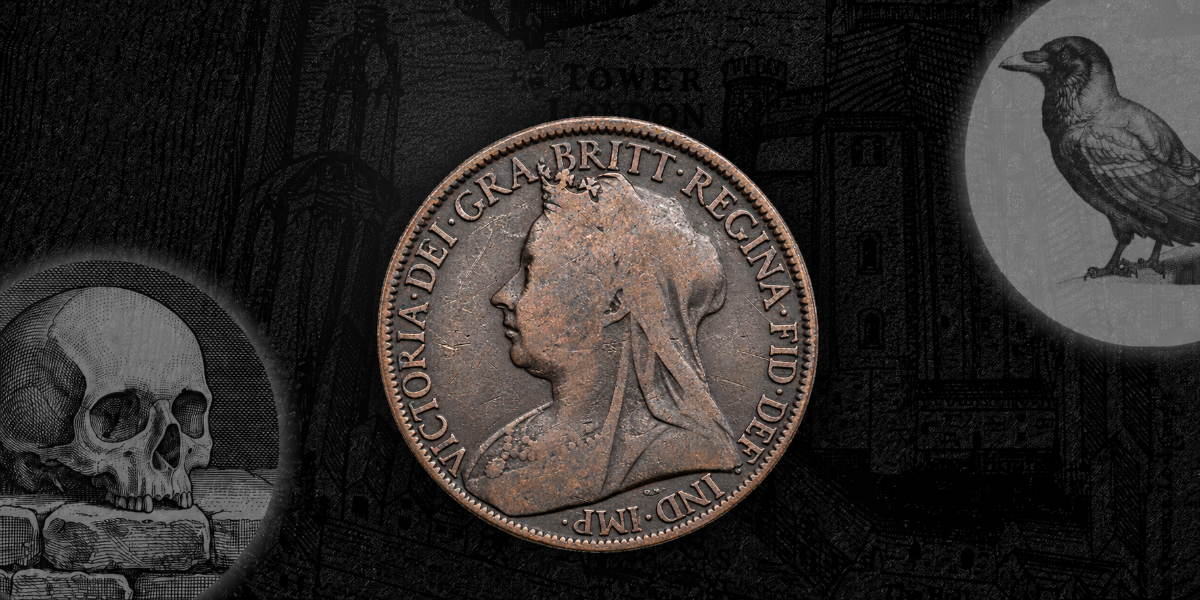
Travel north-west from The Royal Mint’s home in Llantrisant and you’ll find one of Wales’s most famous legends. At Devil’s Bridge, or Pontarfynach, in Ceredigion, local folklore tells of an old woman who struck a bargain with the Devil, agreeing that he could claim the soul of the first living creature to cross a bridge he built across the gorge. She outwitted him by throwing bread across the bridge, tempting her dog to cross first. Devil’s Bridge became a popular tourist attraction during the Victorian Era.
